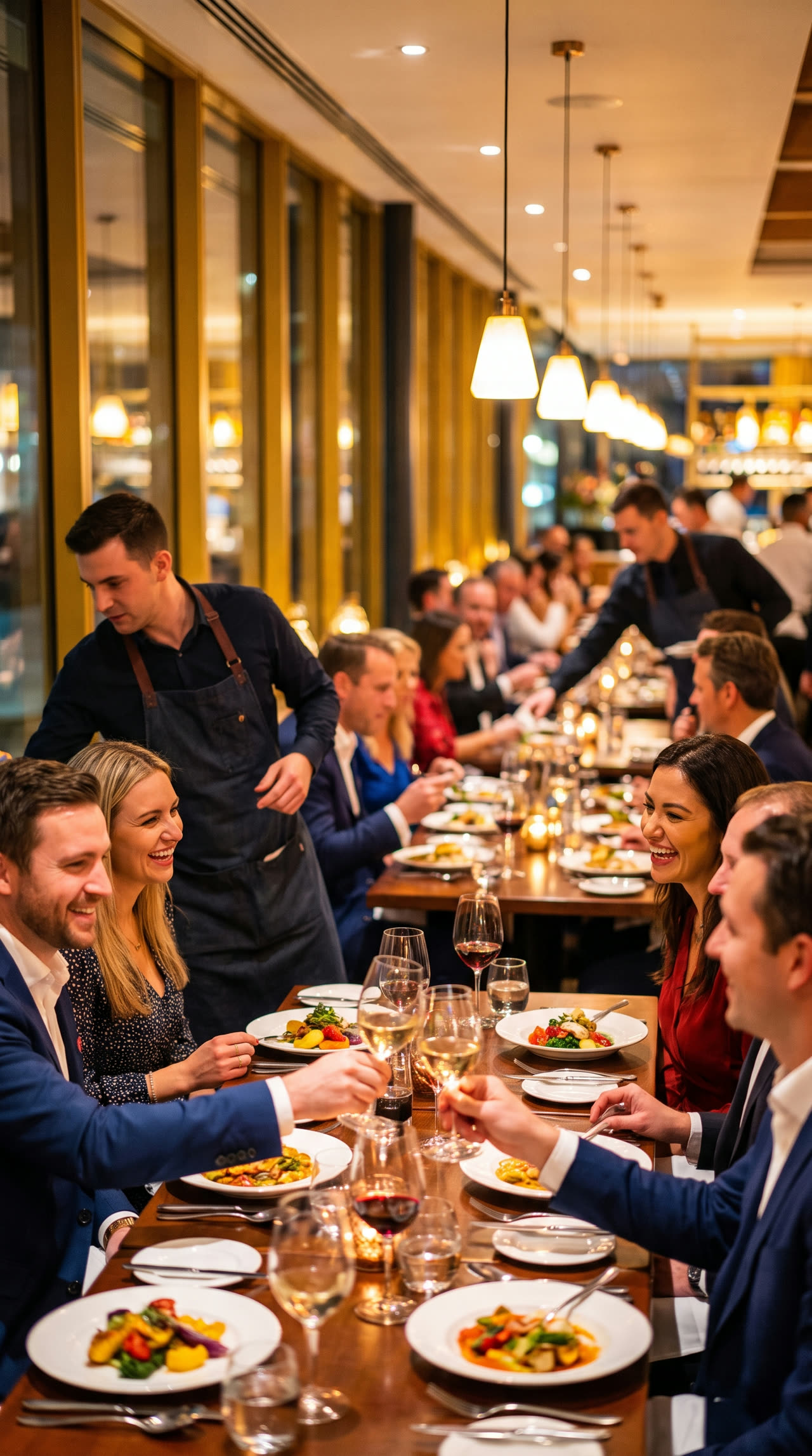
Si tienes un restaurante en Kendall, Doral, Brickell o cualquier zona de Miami con tráfico real, este patrón te va a sonar familiar: el teléfono suena 8-10 veces al día sin que pueda contestar nadie, generalmente porque coincide con el momento en que el host está acomodando una mesa de 8 personas, el manager está resolviendo un problema en cocina, y el mesero senior está cobrando una cuenta.
Cada llamada perdida en un restaurante es entre $40 y $200 que se van, porque casi todas son reservas o pedidos para llevar de alguien que ya decidió comer contigo.
Los 4 momentos críticos del día
1. Lunch rush (11:30am – 1:30pm)
La gente que va a almorzar fuera llama justo antes de salir de la oficina. Si no contestas, llaman al restaurante de al lado. Tu host está acomodando, tu staff está tomando órdenes, nadie atiende. Resultado: pierdes 5-12 reservas de lunch del mismo día.
2. Pre-dinner (5:00pm – 6:30pm)
Los grupos grandes (cenas familiares, parejas, reuniones) hacen su llamada de reserva entre las 5 y las 6:30pm para esa misma noche. En este momento estás haciendo el cambio de turno entre lunch staff y dinner staff. El teléfono es lo último que mira nadie. Pérdida típica: 3-8 reservas para esa misma noche, generalmente las más grandes (mesas de 6+).
3. Dinner rush (7:30pm – 9:30pm)
Igual que lunch pero peor: gente preguntando si hay mesa para esa noche, gente que llamó hace 20 minutos y nadie le contestó volviendo a llamar, walk-ins llamando desde el parking para saber el wait time. Todo coincide con el momento de mayor caos en el comedor.
4. Después del cierre (10:00pm – 12:00am)
Llamadas para reservar el día siguiente, para fines de semana, para eventos especiales (cumpleaños, aniversarios, comidas de empresa). Cuando llegas al día siguiente, ves 6 missed calls del horario nocturno sin saber qué querían.
El costo real al mes
Hagamos números para un restaurante mid-tier en Kendall con ticket promedio de $35 por persona:
| Métrica | Valor |
|---|
| Llamadas perdidas por día | 8-15 |
| % que se hubieran convertido en reserva | ~50% |
| Reservas perdidas / día | 4-7 |
| Personas promedio por reserva | 2.5 |
| Ticket promedio | $35 |
| Revenue perdido / día | $350 – $612 |
| Revenue perdido / mes (30 días) | $10,500 – $18,360 |
Y eso sin contar los grupos grandes (cumpleaños, eventos corporativos) que generan tickets de $500-$2,000 cada uno.
Por qué contratar a alguien no es la respuesta
La solución "lógica", contratar a un host adicional o una recepcionista, falla por tres razones:
- Margen de restaurante: con márgenes típicos de 8-15% en restaurantes, gastar $3,500-$5,000/mes en una persona adicional solo para el teléfono es muy difícil de justificar. Necesitarías generar $25,000-$50,000 adicionales en revenue solo para cubrirla.
- Horarios fragmentados: los 4 momentos críticos suman ~5 horas dispersas en el día. Contratar a alguien por 8 horas para cubrir 5 picos no es eficiente.
- Cobertura nocturna: nadie quiere contestar el teléfono a las 11pm para reservas del día siguiente. Si tu staff de cierre lo hace, es a costa de la limpieza y el cierre real.
Qué hace bySophia AI por un restaurante
bySophia es un agente de voz con inteligencia artificial que atiende el teléfono. Para un restaurante específicamente:
- Atiende toda llamada al primer timbre incluso si entran 4 al mismo tiempo durante el rush.
- Toma reservas directamente en tu sistema (OpenTable, Resy, Yelp Reservations, Google Reserve, o tu propio Excel/Google Calendar).
- Confirma disponibilidad en tiempo real, sabe cuántas mesas tienes libres a qué hora.
- Responde preguntas frecuentes usando tu menú y políticas: "¿tienen opciones vegetarianas?", "¿pueden hacer una torta para cumpleaños?", "¿el patio es pet-friendly?", "¿tienen happy hour?", "¿valet parking?".
- Toma pedidos para llevar con detalles (especiales, alergias, hora de pickup).
- Bilingüe español/inglés, atiende a tu cliente anglo y al hispano sin distinción.
- Te manda resumen al final de cada turno con todas las reservas, takeouts y mensajes que entraron.
- Transfiere al manager cuando hay queja formal, evento grande (15+ personas) o caso complejo.
Importante sobre transparencia
bySophia AI se identifica al inicio de cada llamada como un asistente con inteligencia artificial. Eso cumple con la regulación FCC y, en la práctica, los clientes lo aceptan bien, especialmente para algo simple como "reservar mesa para 4 a las 8pm".
Caso de uso: una semana típica
Un restaurante típico de Kendall procesa entre 1,200 y 2,500 minutos de llamadas al mes. Con el plan Plus de $499/mes ya cubre la mayoría. El plan Pro de $899 (2,950 min) cubre incluso a los más concurridos. Cualquier minuto adicional cuesta $0.30, sigue siendo una fracción del valor recuperado.
Compare contra el revenue recuperado: $10,500-$18,360 al mes. El ROI es obvio.
Lo que no hace
Para ser honestos:
- No reemplaza al host en el comedor, solo atiende el teléfono. El host sigue saludando, sentando y manejando waitlist en persona.
- No maneja quejas complejas, las recibe, las clasifica como urgente y notifica al manager.
- No negocia precios de eventos grandes, los captura y los pasa a la persona que cierra eventos.
Cómo probar si funciona para tu restaurante
Marca el número de demo, simula ser un cliente queriendo reservar mesa para esta noche, ver cuánto tarda en responder, qué te pregunta, cómo te confirma. Si la conversación se siente natural, está listo para tu negocio.
If you run a restaurant in Kendall, Doral, Brickell or any high-traffic Miami area, this pattern will sound familiar: the phone rings 8-10 times a day with nobody able to answer, usually right when the host is seating a party of 8, the manager is handling a kitchen issue, and the senior server is closing a check.
Every missed call at a restaurant is $40-$200 walking away, because almost all of them are reservations or takeout orders from people who already decided to eat with you.
The 4 critical moments of the day
1. Lunch rush (11:30am – 1:30pm)
People going out for lunch call right before leaving the office. If you don't answer, they call the restaurant next door. Your host is seating, your staff is taking orders, nobody picks up. Result: you lose 5-12 same-day lunch reservations.
2. Pre-dinner (5:00pm – 6:30pm)
Large groups (family dinners, couples, business meetings) make their reservation calls between 5 and 6:30pm for that same night. This is when you're switching shifts between lunch and dinner staff. The phone is the last thing anyone is looking at. Typical loss: 3-8 reservations for that same night, usually the biggest ones (parties of 6+).
3. Dinner rush (7:30pm – 9:30pm)
Same as lunch but worse: people asking if there's a table tonight, people who called 20 minutes ago and nobody answered calling back, walk-ins calling from the parking lot to know the wait time. All of it coincides with maximum dining-room chaos.
4. After close (10:00pm – 12:00am)
Calls to book for the next day, for the weekend, for special events (birthdays, anniversaries, company dinners). When you arrive the next morning, you see 6 missed calls from the night without knowing what they wanted.
Real monthly cost
Let's run numbers for a mid-tier Kendall restaurant with a $35 average ticket per person:
| Metric | Value |
|---|
| Missed calls per day | 8-15 |
| % that would have converted to a reservation | ~50% |
| Reservations lost / day | 4-7 |
| Average people per reservation | 2.5 |
| Average ticket | $35 |
| Lost revenue / day | $350 – $612 |
| Lost revenue / month (30 days) | $10,500 – $18,360 |
And that doesn't count large groups (birthdays, corporate events) that generate $500-$2,000 tickets each.
Why hiring someone isn't the answer
The "logical" solution, hire an additional host or receptionist, fails for three reasons:
- Restaurant margins: with typical 8-15% margins, spending $3,500-$5,000/month on an additional person just for the phone is very hard to justify. You'd need to generate $25,000-$50,000 in additional revenue just to cover them.
- Fragmented hours: the 4 critical moments add up to ~5 hours scattered through the day. Hiring someone for 8 hours to cover 5 peaks isn't efficient.
- Late-night coverage: nobody wants to answer the phone at 11pm for next-day reservations. If your closing staff does it, it's at the expense of cleaning and actual closing.
What bySophia AI does for a restaurant
bySophia is a voice agent with artificial intelligence that answers the phone. Specifically for a restaurant:
- Answers every call on the first ring even if 4 come in at once during rush.
- Takes reservations directly in your system (OpenTable, Resy, Yelp Reservations, Google Reserve, or your own Excel/Google Calendar).
- Confirms real-time availability, knows how many tables you have free and at what time.
- Answers frequently asked questions using your menu and policies: "do you have vegetarian options?", "can you make a birthday cake?", "is the patio pet-friendly?", "do you have happy hour?", "valet parking?".
- Takes takeout orders with details (specials, allergies, pickup time).
- Bilingual Spanish/English, serves your English-speaking and Spanish-speaking customers alike.
- Sends you a summary at the end of each shift with all reservations, takeouts and messages received.
- Transfers to the manager when there's a formal complaint, a large event (15+ people), or a complex case.
Important transparency note
bySophia AI identifies itself as an AI assistant at the start of every call. That complies with FCC regulation and, in practice, customers accept it well, especially for something simple like "reserve a table for 4 at 8pm."
Use case: a typical week
A typical Kendall restaurant processes between 1,200 and 2,500 minutes of calls per month. The Plus plan at $499/month covers most. The Pro plan at $899 (2,950 min) covers even the busiest ones. Any extra minutes cost $0.30, still a fraction of the value recovered.
Compare against recovered revenue: $10,500-$18,360 per month. The ROI is obvious.
What it does NOT do
To be honest:
- It does not replace the host in the dining room, only answers the phone. The host still greets, seats and manages the waitlist in person.
- It does not handle complex complaints, receives them, classifies them as urgent and notifies the manager.
- It does not negotiate prices for large events, captures them and passes them to whoever closes events.
How to test if it works for your restaurant
Call the demo number, pretend to be a customer wanting to reserve a table for tonight, see how fast it responds, what it asks, how it confirms. If the conversation feels natural, it's ready for your business.